
The Ultimate Guide to AI Agents for Logistics
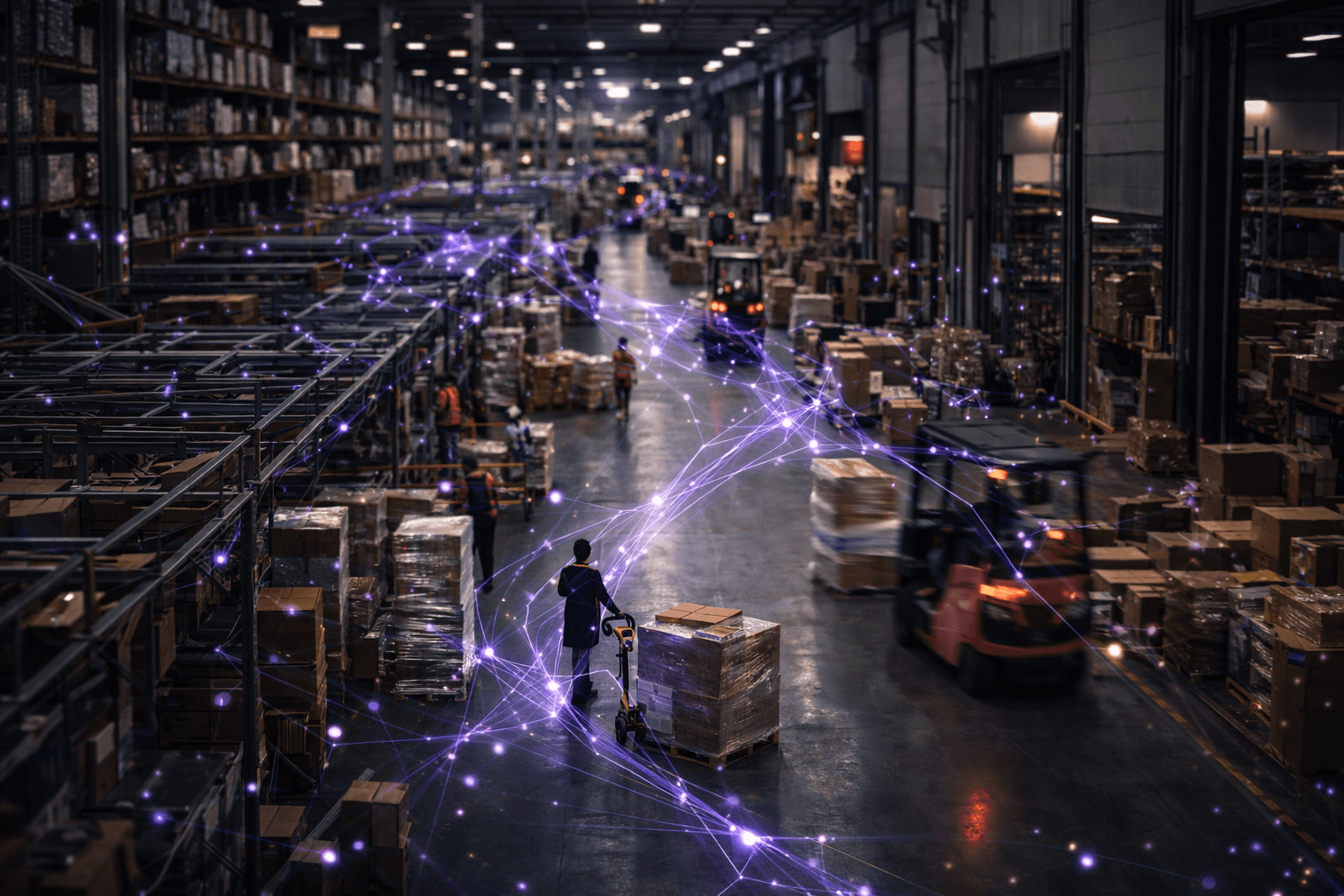
What actually works, what fails, and where to start.
Your logistics team is overwhelmed.
Email volume keeps rising.
Margins are tight.
Customers expect instant answers.
Hiring more people is expensive and hard to scale.
So you’re trying to understand how AI can meaningfully assist your operation.
But most content about AI in logistics is either fluffy, theoretical, or written by people who have never touched a TMS, handled real exceptions, or lived inside a freight inbox.
This guide is different.
This is a practical, no-BS breakdown of how AI agents actually work in logistics, what they can automate today, where they fail, and how to deploy them without breaking your systems or workflows.
1. What AI Agents Actually Are
An AI agent is not a chatbot.
It’s not an autoresponder.
It’s not just a model answering questions.
A real AI agent can:
Process inbound requests.
Understand intent, regardless of language.
Pull data from systems.
Perform actions.
Complete tasks.
Log results.
Respond with real outcomes.
In logistics terms, this means an AI agent that can do (and fully complete) the same work a human rep does, using the same existing systems and workflows they already use.
If it cannot create shipments, generate quotes, update orders, or pull live tracking data inside your existing systems, it is not acting as a true logistics AI agent.
2. Why Logistics Is a Perfect AI Agent Use Case
Logistics is full of repetitive workflows, structured tasks, high-volume inbound requests, predictable exceptions, and system-driven operations.
Most logistics work follows a similar pattern:
A request comes in.
The request is reviewed for completeness.
Info is copied and entered into a system.
A quote, shipment, or update is generated and logged.
A reply goes out.
That is exactly the kind of structured, repeatable workflow that logistics AI agents are built to execute.
Not replacing humans.
Removing repetitive manual work so humans can focus on judgment, escalation, and relationship-driven tasks.
3. Where Logistics Teams Are Bleeding Time
Most ops teams spend huge amounts of time on work that should not require a human.
Not because the work is complex, but because it is repetitive, fragmented across systems, and buried in inboxes.
Common examples include:
Copying email data into a TMS.
Generating repetitive freight quotes.
Answering tracking and ETA requests.
Chasing missing shipment info.
Updating order statuses.
Logging call and email notes.
Individually, these tasks feel small.
In aggregate, they consume hours per rep per day.
This work is time-consuming, error-prone, mentally draining, and expensive to scale. It also creates hidden costs like slower response times, dropped requests, burned out ops staff, and missed revenue for your company.
AI agents deliver the most value where humans are doing high-volume, low-judgment work, so teams can refocus on exceptions, customer relationships, and decisions that actually require experience.
4. What AI Agents Can Automate Right Now
This is what works today, not five years from now.
The biggest wins don't come from overhauling your entire operation or layering on surface-level AI.
They come from automating repetitive, rules-driven, system-based work that your ops team already handles every day, inside the systems you already use.
Quoting and Rates
AI agents can handle a large portion of inbound quote flow, especially for repeat lanes and standard requests.
For example, they can:
Extract shipment details from inbound emails and attachments.
Identify origin, destination, weight, dimensions, equipment type, and service level.
Match requests to rate tables or pricing logic.
Generate freight quotes automatically.
Attach rate sheets or breakdowns.
Send structured, customer-ready replies.
Flag complex or high-risk quotes for human review.
This reduces response times, increases quote throughput, and helps teams win more business without adding headcount.
Shipments and Orders
AI agents can handle much of the repetitive work involved in creating and updating shipments.
For example, they can:
Create shipments in a TMS.
Populate shipment fields from email or portal requests.
Update pickup, delivery, and consignee details.
Modify accessorials and service requirements.
Handle reschedules and appointment changes.
Log updates and actions in CRM or ops tools.
This removes hours of manual data entry and reduces costly input errors.
Tracking and Status Requests
Tracking is one of the highest-volume inbound categories in logistics.
AI agents can:
Pull real-time shipment status from a TMS or carrier portals.
Respond to WISMO requests automatically.
Send proactive delay notifications.
Provide ETA updates and proof of delivery.
Detect late shipments and escalate when needed.
Instead of ops teams spending their day replying to status emails, AI agents handle the majority of routine tracking communication.
Exceptions and Missing Information
Real logistics work is messy. Incomplete requests are normal.
AI agents can:
Detect missing shipment details in inbound requests.
Identify what information is required to proceed.
Ask customers for the exact missing fields.
Track responses and resume workflows once info arrives.
Flag urgent, high-risk, or time-sensitive exceptions.
Escalate edge cases to human operators.
This keeps work moving forward instead of stalling in inbox backlogs.
Customer Communication at Scale
Customer communication is constant and time-consuming.
AI agents can:
Draft and send accurate customer replies.
Maintain consistent tone, formatting, and brand voice.
Handle high-volume inboxes without falling behind.
Route complex conversations to humans.
Follow up automatically when customers go silent.
Log conversations and outcomes in CRM or TMS.
The result is faster responses, fewer dropped threads, and a more professional customer experience.
Document Handling and Back Office Tasks
AI agents can also automate document-heavy workflows.
For example, they can:
Extract data from BOLs, PODs, invoices, and attachments.
Match documents to shipments.
Upload files to internal systems.
Validate required paperwork.
Flag missing or incorrect documentation.
This reduces back office workload and speeds up billing and reconciliation.
What This Means in Practice
The strongest use cases today are not replacing humans entirely.
They are focusing on automating high-volume, repetitive, rules-based tasks within your existing workflow.
AI agents work best when they take the first pass, handle routine execution, and escalate judgment-heavy work to people.
That is where your team will see the real ROI.
5. Email, Voice & Chat AI Agents in Real Operations
In most logistics businesses, email is still where work actually happens.
Quotes, tracking requests, exceptions, document follow-ups, and last-minute changes all hit the inbox first. Even when teams use a TMS heavily, email remains the front door to operations.
That makes it the most practical place for AI agents to operate.
A real logistics email AI agent is not just sorting messages or drafting replies. It works inside the same operational flow your team already follows.
In practice, that means it can:
Identify the intent behind inbound emails.
Extract shipment and order details from messages and attachments.
Generate quotes for standard requests.
Update records inside a TMS or CRM.
Request missing information when needed.
Respond once real work has been completed.
The value is not in typing faster emails. It’s in removing repetitive execution from the ops queue.
Voice plays a different role, but an important one.
Phones are where urgency, exceptions, and coordination still live. Dispatch changes, reschedules, and customer issues often surface in real time and require immediate action.
In many logistics operations, that urgency is compounded by language. Inbound calls and emails often come in multiple languages, especially across carriers, drivers, and international customers. Voice AI agents need to understand and respond accurately across languages in real time, without slowing resolution or routing everything back to human staff.
A real logistics AI voice agent fits into that environment by:
Handling inbound calls naturally.
Understanding logistics-specific terminology and intent.
Conducting multilingual conversations when required.
Accessing live shipment and booking data during the call.
Making allowed updates directly in systems.
Logging outcomes into existing tools.
Escalating when judgment or authority is required.
The same principle applies to logistics AI chat agents.
Whether it’s embedded on a customer portal, a tracking page, or an internal messaging tool, a real logistics AI chat agent retrieves live data, updates systems where allowed, and logs outcomes directly into existing tools.
When logistics AI voice agents and chat agents are treated as part of the operation, not a front desk layer, they reduce load instead of creating more follow-up work.
Across email, voice and chat, the line is simple: if a logistics AI agent cannot connect to real systems and complete real steps, it is not meaningfully changing operations. It is just shifting work around.
6. System-Connected AI Agents vs Surface-Level Tools
A lot of AI tools in the market look impressive on the surface. They read emails, summarize requests, and draft responses. In a demo, that can feel like progress.
In real operations, it often is not.
Surface-level AI sits outside your systems. It can interpret information, but it cannot move anything forward without a human stepping in to actually do the work.
That usually means:
Reading inbound messages.
Drafting replies.
Asking humans to copy data into systems.
Leaving execution unchanged.
The result is less typing, but not less work.
System-connected AI is different.
Instead of stopping at interpretation, it operates inside the same systems your team already uses. It pulls live data, writes updates, and completes steps that would otherwise land in an ops queue.
In practice, that means the AI agent can:
Read inbound requests and determine intent.
Pull live shipment, order, or rate data.
Write updates directly into a TMS, CRM, or internal tools.
Complete workflows end-to-end.
Escalate only when judgment or exception handling is required.
For operators, the difference shows up quickly.
Surface-level tools make work look cleaner. System-connected AI agents make work disappear.
This is also where a lot of AI projects quietly break down.
If a tool cannot touch real systems, teams end up with a split workflow. AI handles the front end, humans still do the execution, and the handoff becomes the bottleneck.
In logistics, that kind of fragmentation does not scale.
System connection is what turns AI from a helper into an operational layer. Without it, you are optimizing communication. With it, you are actually reducing work.
7. Why Most Logistics AI Projects Fail
Most logistics AI projects do not fail because the technology is subpar.
They fail because they’re introduced in ways that do not respect how operations actually run.
The most common failure pattern resembles this: a tool demos well, leadership buys in, and then the burden of making it work quietly shifts to the ops team.
From there, one of 3 things typically happens:
1. They Go Too Big
New systems. New workflows. A mandate to “automate everything.”
Even small workflow changes create friction in high-volume environments. When a tool requires operators to leave their TMS, work in parallel systems, or rethink how requests are processed, adoption slows and value stalls.
Over-automation creates implementation drag.
Ops teams do not need transformation. They need execution inside the systems they already run.
2. They Go Too Small
Instead of operational automation, teams deploy lightweight tools that draft emails, summarize threads, or suggest replies.
The communication looks cleaner.
But the work still has to be completed manually in the TMS.
The queue does not shrink. It just moves.
Lots of small tools that are not system-connected rarely create meaningful efficiency gains.
3. They Are Not System-Based
Logistics is not a clean, linear process. Missing information, last-minute changes, edge cases, and urgency are the norm.
Tools that assume perfect inputs or operate outside core systems break quickly once they meet real traffic.
If AI is layered on top of operations instead of integrated into them, teams end up with split workflows. AI handles the front end. Humans still execute in the system. The handoff becomes the bottleneck.
That is where most projects quietly stall.
Overpromising makes it worse. When AI is positioned as a replacement instead of an execution layer, trust erodes fast. Ops teams are quick to spot gaps, and once confidence drops, projects get sidelined.
The common thread across failures is simple: the technology is added on top of operations instead of built into them.
Your logistics team does not need flashy AI.
You need automation that is predictable, controllable, and boring in the best possible way.
The tools that succeed are the ones that reduce work inside existing systems, without forcing new coordination problems onto the people running your operation.
8. What Actually Works in Real Ops Environments
A strong logistics AI implementation mainly comes down to one thing - scope.
The teams seeing results are not trying to automate everything on day one. They start by automating most of the repetitive, execution-heavy work that slows teams down and clogs inboxes.
In practice, that usually means automating the majority of day-to-day operational execution, while keeping humans focused on exceptions, judgment calls, and edge cases.
What works consistently looks like this: teams begin with high-volume, rules-driven workflows.
Quote requests, tracking inquiries, standard updates, routine shipment creation, and basic changes are handled first. This is where the bulk of time is spent and where automation delivers immediate relief.
Humans stay in the loop where it matters. Exceptions, unusual requests, time-sensitive decisions, and anything that falls outside normal patterns are escalated instead of forced through automation.This preserves trust and prevents small issues from turning into operational problems.
Deployment happens inside existing systems.
The tools that succeed do not ask teams to rethink their process or move work into new platforms. They operate inside the stack that already exists and follow the same rules operators rely on today.
Execution is prioritized over novelty. The goal is not to showcase AI. The goal is to reduce backlog, shorten response times, and free experienced operators to focus on work that actually benefits from experience.
When done right, the AI agent does not feel like a new tool that needs babysitting. It feels like a dependable ops hire that quietly handles most routine execution without slowing things down or creating noise.
That is where real ROI shows up, consistently and at scale, inside the flow of the operation.
Scope is what drives speed to impact.
When teams focus on task-level execution inside existing systems, instead of trying to re-platform or automate everything at once, results come quickly. In most logistics environments, high-volume, rules-based work can be meaningfully automated in 30 to 60 days.
That is what changes momentum.
9. The Future of AI Agents in Logistics
Most of what has been described so far is no longer theoretical. For teams already using system-connected AI agents, this is the present.
AI agents are already handling large portions of repetitive execution work. They operate inside email, voice, chat and web workflows, connect directly to real systems, and reduce operational load without forcing teams to change how they work.
That is the first real phase of logistics AI.
The future builds on this foundation, not by becoming flashier, but by going deeper into operations.
Where We Are Now
Today, effective AI agents are primarily reactive.
They respond when work arrives:
An inbound email.
A tracking request.
A quote inquiry.
A document submission.
They execute defined workflows reliably and at scale. They complete real tasks, update systems, escalate exceptions, and remove a significant amount of manual work from ops teams.
For many organizations, this alone represents a meaningful step change. Faster response times, lower backlog, and the ability to handle more volume without adding headcount are already tangible advantages.
But this is not the end state.
What Changes Next
The next phase is less about smarter models and more about how AI agents operate inside the business.
From reactive to proactive execution
Instead of waiting for requests, AI agents increasingly identify issues before they surface. Late shipments, missing documentation, stalled workflows, and risk patterns are flagged earlier, with corrective steps initiated before customers or partners follow up.
From cross-system execution to deeper coordination
AI agents already operate across systems. What changes next is depth and continuity. Longer, multi-step workflows span email, a TMS, carrier portals, billing tools, and CRM without manual handoffs between each step.
From language handling to language invisibility
As operations scale across regions, language stops being a separate concern and becomes part of normal execution. Inbound requests, updates, and coordination increasingly happen across languages without creating delays, re-work, or parallel workflows.
Agents handle communication in the background, allowing ops teams to operate as a single unit even when customers, carriers, and partners are not speaking the same language.
From stateless automation to operational memory
AI agents begin carrying context forward. They adapt based on prior outcomes, customer behavior, lane patterns, and escalation history. Over time, they behave less like scripts and more like experienced operators who understand how things usually unfold.
From task execution to decision support
AI agents do not replace judgment, but they increasingly support it. They surface risks, highlight trade-offs and provide operators with better information faster, especially in high-volume or time-sensitive situations.
None of this requires replacing systems or redesigning operations. It builds directly on the same system connections and workflows that make AI agents effective today.
The Long-Term Advantage
Over time, AI agents stop feeling like tools and start functioning as an operational layer.
Not something teams experiment with, but something operations are designed around.
Organizations that reach this stage quietly build a compounding advantage. They respond faster, operate leaner, and absorb growth without the friction that slows competitors.
The gap does not show up overnight.
But once it does, it becomes impossible to close.
10. How to Evaluate an AI Agent Solution for Your Logistics Company
By this point, a few things should be clear:
AI agents can materially change logistics operations.
They can automate most repetitive execution work.
They can reduce backlog, speed response times, and let teams scale without hiring.
But only if the solution you choose is built for real operations.
Most failures do not come from bad intentions. They come from choosing tools that look capable in isolation but cannot survive inside a live logistics environment.
Use the checklist below to evaluate whether a logistics AI agent solution can actually support everything discussed in this guide:
Can it complete real operational work end-to-end?
This is non-negotiable.
A real logistics agent must be able to:
Create and update shipments inside your TMS.
Generate and send freight quotes.
Pull live tracking and status data.
Modify bookings and delivery details.
Log outcomes and actions.
If the product stops at drafting replies or summarizing requests, it is not automating operations. It is leaving the core work untouched.
Can it operate inside your existing systems?
Success depends on fitting into your stack, not replacing it.
You should expect the AI agent to:
Work with your current TMS, CRM, inbox, and portals.
Write updates into systems, not just read from them.
Follow existing workflows and permissions.
Avoid migrations or parallel processes.
If adoption requires changing how your team works or moving data between tools manually, friction will kill momentum.
Can it handle real-world messiness?
Logistics inputs are rarely clean.
A viable logistics AI agent solution must handle:
Incomplete emails and vague requests.
Missing shipment details.
Last-minute changes.
Urgent exceptions.
Non-standard customer behavior.
If it only works when everything is perfectly formatted, it will fail in production.
Can it operate across languages without slowing execution?
A viable logistics AI agent should be able to:
Understand inbound emails, calls and chat messages in multiple languages.
Respond accurately across email, voice and chat.
Avoid manual translation steps or handoffs.
Prevent language issues from delaying execution.
Scale global operations without creating parallel workflows.
If language handling requires human intervention, automation will break down at scale.
Can it scale without breaking operations?
Look closely at how deployment actually works.
A strong logistics AI agent solution should:
Go live in weeks, not quarters.
Start with meaningful workflows, not toy pilots.
Run in parallel with humans while trust builds.
Expand safely without retraining the entire team.
If rollout feels risky or disruptive, operators will resist it.
Does it provide real control and visibility?
Trust is earned through control.
You should have:
Clear audit logs.
Approval and escalation rules.
Defined boundaries on what gets automated.
Visibility into actions taken by the AI agent.
Enterprise-grade security and compliance.
If ops and IT cannot trust it, it will never reach meaningful scale.
Is the platform enterprise-grade and independently certified?
Security is everything.
A secure logistics AI agent solution should:
Meet recognized standards such as SOC 2 and ISO 27001.
(If you handle regulated data) - Support PCI and HIPAA requirements where applicable.
Have configurable access controls, audit logs, and permissions.
Allow you to clearly define what the AI agent is allowed to do inside your systems.
In logistics, AI agents do not sit on the sidelines. They read emails, access shipment data, update orders, and log activity inside core systems.
That level of access requires enterprise security standards, clear permission controls, and auditable behavior.
If those foundations are weak, everything else becomes a risk.
Can it grow with where operations are heading?
You are not buying for today alone.
The right logistics AI agent solution should:
Support deeper cross-system workflows over time.
Carry operational context forward.
Adapt as volumes, customers, and complexity grow.
Function as an execution layer, not a point solution.
If the product is already at its ceiling, you will outgrow it quickly.
Finally, choose a partner you can trust. Look for one building specifically for logistics, not a generic AI layer applied everywhere.
Specialization matters. It means the roadmap advances capabilities that reflect how your operation actually runs.
At the same time, the platform should adapt to your workflows, not force you into theirs.
How Expertly Fits This Checklist
Expertly was built specifically to meet every single one of these critical requirements.
It completes real logistics work end-to-end, not just surface-level tasks.
It connects directly into existing systems without forcing replacements.
It handles messy, high-volume inbound workflows across email, voice, chat and web.
It supports execution across more than 70 languages.
It deploys quickly with minimal disruption.
It meets enterprise security standards, including SOC 2 and ISO 27001 certifications, with support for PCI and HIPAA environments where required.
It includes the controls, visibility, and guardrails real operations require.
And it scales as automation expands deeper into execution.
This is not experimental automation. It is operational execution.
To see how Expertly can automate 90% of repetitive logistics tasks inside your existing workflows, schedule a demo.
FAQs
1. What is an AI agent in logistics?
An AI agent in logistics is software that completes real operational work inside logistics systems. Unlike chatbots, it can read requests, pull live system data, take action, update records, and respond with completed outcomes.
2. What logistics tasks can AI agents automate today?
Today, AI agents can automate most repetitive logistics execution, including freight quoting, shipment creation, tracking and ETA responses, exception handling, document processing, and high-volume customer communication.
3. How is an AI agent different from a chatbot or automation tool?
Chatbots talk and automation tools follow rules. AI agents execute workflows end-to-end inside real systems, which reduces operational backlog instead of just drafting messages.
4. Do AI agents replace logistics operations teams?
No. AI agents automate repetitive execution work while humans remain responsible for judgment, exceptions, customer relationships, and accountability.
5. How do I choose the right AI agent provider for logistics?
Choose a provider that completes real tasks inside your systems, deploys without workflow changes, handles messy real-world inputs, and provides control, visibility, and auditability.
6. How long does it take to deploy an AI agent in logistics?
Most focused logistics AI deployments go live in weeks, not quarters, when they work inside existing systems and start with meaningful workflows.
7. Will AI mess up our workflows?
Only if it forces new workflows. The right AI agents work inside your existing processes and follow current operational rules.
8. We have too many exceptions. Will AI agents still work?
Yes. AI agents work best when they automate repetitive execution and escalate exceptions to humans instead of forcing everything through automation.
9. Our systems are old. Is that a problem?
No. Older systems are exactly why layering AI automation on top is safer than replacing them.
10. How can Expertly help automate logistics operations?
Expertly automates real logistics work end-to-end inside existing systems, handling around 90% of repetitive execution across email, voice, chat and web without disrupting workflows.